
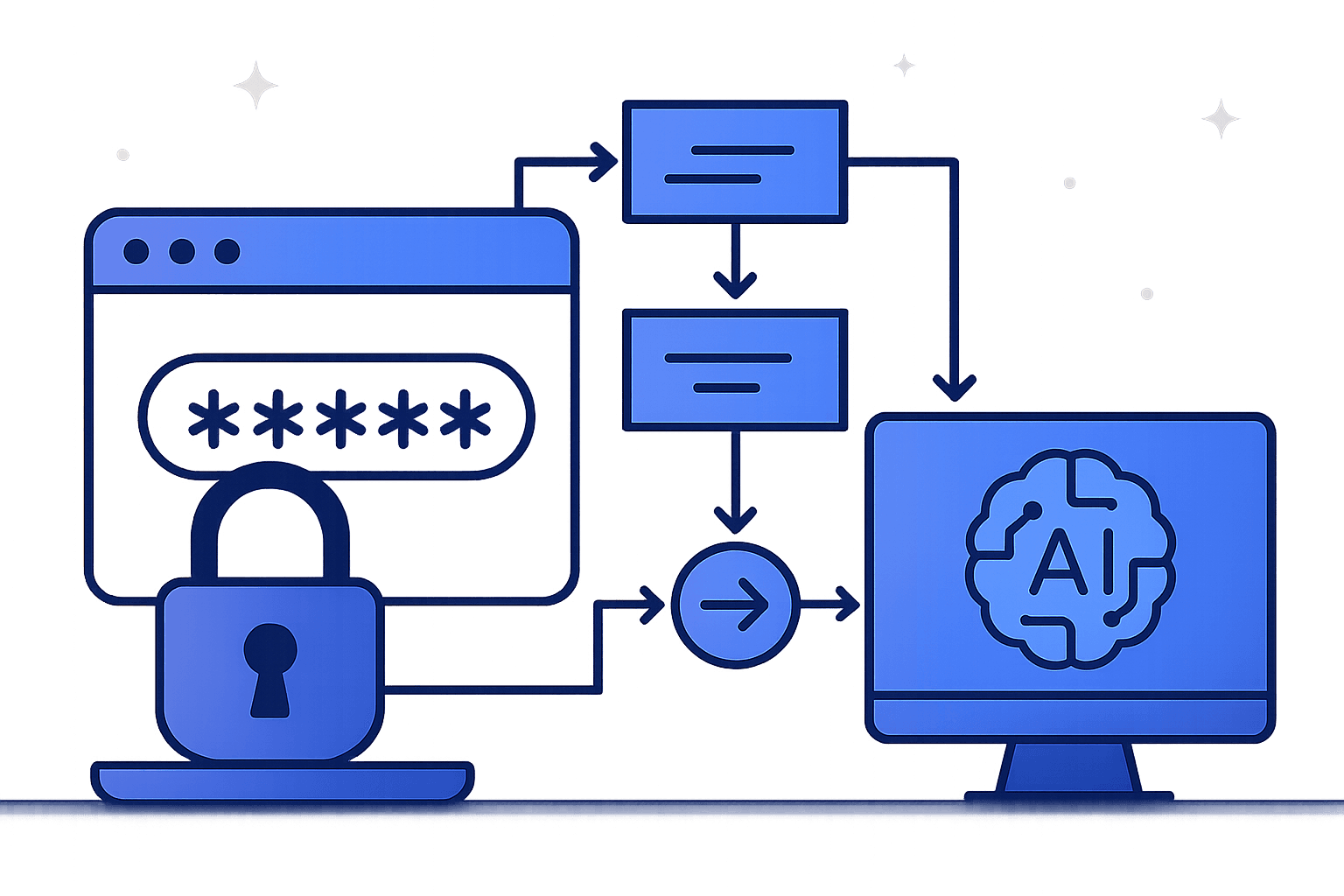
Privacy‑Safe Debug AI: Preventing Secret Leakage from Logs, Traces, and Crash Dumps
AI assistants that can read your logs, traces, metrics, and crash dumps are incredibly powerful. They also pose a real privacy and security risk if built naïvely. Secrets leak where developers look first: into the places we use for diagnosis.
This article maps practical threat models and details how to make debug AI safe—without neutering its usefulness. We’ll cover:
- Threat models for logs, traces, minidumps, and memory snapshots
- Structured redaction that’s testable, reversible under escrow, and evidence-driven
- On-device inference to triage and summarize before data leaves the host
- DLP-aware tracing with OpenTelemetry processors and policy-as-code
- Consented sampling with purpose limitation and time-bound scopes
- Auditable data flows and privacy ledgers to prove compliance
The tone is opinionated: shipping a “debug AI” without privacy-by-default is irresponsible. The good news: the ecosystem has matured enough that a safe path is both feasible and fast.
Executive summary
- Logs fuel debug AI, but raw logs often include API keys, cookies, auth tokens, PII, PHI, and secrets from third-party SDKs.
- Treat debug AI like an analyst with hazardous-material access: protect inputs, mask outputs, and log everything it touches.
- Prefer structure over stringly: typed fields with sensitivity labels beat regex on free-text.
- Run inference as close to the source as possible; ship summaries and signals, not the haystack.
- Integrate DLP into tracing/logging pipelines with filters that drop secrets before storage/export.
- Sampling must be consent- and purpose-bound; flip on, collect, flip off, automatically expire.
- Maintain a privacy ledger: what was collected, why, for how long, and who accessed it.
Why debug AI leaks secrets (and how to frame the risk)
Modern apps emit:
- Application logs and metrics
- OpenTelemetry traces and baggage
- Crash dumps (minidump/full core), heap snapshots
- Console output from dependencies (browsers, DB drivers)
Those data products are irresistible inputs to AI assistants—exactly because they’re messy and complete. They’re also where secrets concentrate:
- Credentials: API keys, OAuth tokens, JWTs, service-to-service mTLS keys
- Identifiers: emails, phone numbers, device IDs, IPs, cookie IDs
- Content: free-text, search queries, request payloads, health data, payment info
- Environment: cloud account IDs, internal hostnames, VPC CIDRs
Threat model (LINDDUN + real ops)
- Linkability/Identifiability: Logs enable tying events to individuals.
- Non-repudiation: Logs become evidence; storing too much is a liability.
- Detectability/Disclosure: Unredacted dumps expose secrets to anyone with access.
- Unawareness/Non-compliance: Operators may not realize consent wasn’t obtained or data residency is violated.
Actors and vectors:
- Internal developer using the debug AI accidentally retrieves a customer’s access token.
- Compromised vendor collector exfiltrates traces containing Authorization headers.
- Misconfigured crash handler uploads full core dumps with plaintext secrets.
- Model provider or plugin logs prompts/responses; your logs become their training data.
Assume: if a secret can enter your logs, it will. Design for defense-in-depth: prevent, detect, and minimize impact.
Design principles
- Minimize and structure: emit only what you need, with typed fields and sensitivity labels.
- Privacy by default: filters on by default, opt-in for elevated collection.
- Edge-first: perform triage, summarization, and DLP checks on-device or in-VPC.
- Separation of duties: redacters, escrows, and analysts have distinct keys and roles.
- Purpose limitation: tie collection to a ticket/incident with expiration.
- Observability for observability: audit every collection, redaction, access, and export.
- Open standards: OpenTelemetry, policy-as-code (OPA), cryptographic logging.
Architecture blueprint
- Producer: Applications emit structured logs, metrics, and traces with field-level sensitivity annotations.
- Gate: An on-host agent performs structured redaction and on-device inference (summaries, tags).
- Collector: OpenTelemetry Collector runs DLP processors (attribute transforms, regex/NER, allow/deny lists), sampling, and export controls.
- Vault: Field-level reversible redaction map encrypted with a separate key (escrowed access only).
- Storage: Redacted telemetry in region-appropriate backends, with short TTL for elevated data.
- Debug AI runtime: Executes queries with ABAC/RBAC, privacy guardrails, and result scrubbing.
- Ledger: Immutable, append-only log of what data flowed where, under which purpose/consent.
Structured redaction: schemas beat regex
Regex-only solutions fail under pressure. They produce false negatives (missed secrets) and false positives (useless logs). The better pattern is schema-first logging with sensitivity metadata.
Define a typed log schema with sensitivity
Example using Pydantic models and a Sensitivity enum:
pythonfrom enum import Enum
from pydantic import BaseModel, Field
from typing import Optional

class Sensitivity(str, Enum):
    PUBLIC = "public"
    INTERNAL = "internal"
    SENSITIVE = "sensitive"
    SECRET = "secret"  # credentials/keys/tokens

class LogField(BaseModel):
    name: str
    value: str
    sensitivity: Sensitivity = Sensitivity.INTERNAL

class HttpLog(BaseModel):
    route: LogField = Field(default_factory=lambda: LogField(name="route", value="", sensitivity=Sensitivity.INTERNAL))
    method: LogField = Field(default_factory=lambda: LogField(name="method", value="GET", sensitivity=Sensitivity.PUBLIC))
    status: LogField = Field(default_factory=lambda: LogField(name="status", value="200", sensitivity=Sensitivity.PUBLIC))
    user_id: Optional[LogField] = None  # typically sensitive identifier
    authz_header: Optional[LogField] = None  # SECRET
    body: Optional[LogField] = None  # potentially sensitive content
A redactor processes fields by sensitivity, not by guessing with regex.
Reversible redaction under escrow
Sometimes you need to restore a value under strict conditions (e.g., legal or forensics). Use reversible tokens with escrowed keys.
- Replace sensitive/secret fields with stable tokens: REDACTED::<hash_prefix>
- Store a mapping encrypted with a separate key in a vault; only privacy officers or incident commanders can request re-identification.
- Log the re-identification request in the ledger.
pythonimport hashlib, json, os
from cryptography.hazmat.primitives.ciphers.aead import AESGCM

ESCROW_KEY = os.environ["ESCROW_KEY"].encode()  # stored in HSM/secret manager

def token_for(value: str, context: str) -> str:
    h = hashlib.sha256((context + value).encode()).hexdigest()[:16]
    return f"REDACTED::{h}"

class RedactionMapStore:
    def __init__(self, aead_key: bytes):
        self.aead = AESGCM(aead_key)

    def put(self, token: str, value: str, context: str) -> bytes:
        nonce = os.urandom(12)
        payload = json.dumps({"token": token, "value": value, "context": context}).encode()
        ct = self.aead.encrypt(nonce, payload, associated_data=context.encode())
        return nonce + ct  # store in vault with access control

mapper = RedactionMapStore(ESCROW_KEY)

def redact_field(field: LogField, context: str) -> LogField:
    if field.sensitivity in (Sensitivity.SENSITIVE, Sensitivity.SECRET):
        tok = token_for(field.value, context)
        mapper.put(tok, field.value, context)
        return LogField(name=field.name, value=tok, sensitivity=field.sensitivity)
    return field
Augment with high-precision detectors
Not all logs are perfectly structured. Add detectors with high precision:
- Exact secret detectors: JWT, OAuth bearer, AWS access keys, Azure SAS, GCP service accounts, private key PEM headers.
- PII/PHI detectors: email, phone, SSN, credit cards (with Luhn), IBAN.
- NER with curated patterns: use Microsoft Presidio, Google Cloud DLP, or an internal library.
Run detectors in the on-host agent and again in the collector for defense-in-depth.
Test and measure redaction quality
- Maintain a corpus of synthetic logs with injected canary secrets. Verify recall and precision before deployment.
- Track false negatives as Sev-1 defects. A secret in storage means rollback and kill-switch the debug AI.
- Record detector versions in the ledger for reproducibility.
On-device inference: ship intelligence, not raw data
Where possible, let the machine that produced the logs summarize them. The idea:
- Parse logs/traces locally
- Detect and redact secrets locally
- Run a small, quantized model on-device to summarize, tag anomalies, or extract structured signals
- Ship only the summary and signals to the backend AI
Advantages: less bandwidth, lower latency to insight, and far less sensitive data in transit.
Practical stack
- LLM runtime: llama.cpp or GGML/GGUF models (e.g., Phi-3-mini, Llama-3.1-8B in 4–8-bit quantization) running on developer laptops or servers in your VPC.
- NER/PII: Presidio or spaCy pipelines on-device.
- Policy engine: OPA embedded to decide what can be exported.
python# Pseudocode: local summarization with guardrails
from presidio_analyzer import AnalyzerEngine
from llama_cpp import Llama

analyzer = AnalyzerEngine()
llm = Llama(model_path="./phi3-mini.gguf", n_ctx=2048, n_threads=8)

raw_chunk = """POST /v1/charge 500
Authorization: Bearer eyJhbGciOiJIUzI1NiIsInR5cCI6IkpXVCJ9...
user_email=jane@example.com amount=4999 currency=USD
"""

# 1) Detect and redact locally
entities = analyzer.analyze(text=raw_chunk, language="en")
redacted = raw_chunk
for e in entities:
    redacted = redacted[:e.start] + "<REDACTED:" + e.entity_type + ">" + redacted[e.end:]

# 2) Summarize locally (note: prompt instructs no secrets)
prompt = f"""
You are a debugging assistant. Summarize errors and causes in bullet points.
Never repeat secrets or tokens; if seen, output <REDACTED>.

Logs:
{redacted}
"""
resp = llm(prompt, max_tokens=256, stop=["\n\n"])
summary = resp["choices"][0]["text"].strip()

# 3) Export only summary + minimal signals
export_payload = {"summary": summary, "signals": {"http.status": 500, "route": "/v1/charge"}}
Set a hard cap on prompt size and disable raw export unless explicitly consented.
Privacy-preserving features
- Avoid exporting embeddings of raw secrets. If you must export vector signals, consider hashed n-grams or token frequency features instead of semantically rich embeddings.
- For mobile, use platform privacy controls (iOS Privacy Manifests, Android Data Safety) and audit offline storage.
DLP-aware tracing with OpenTelemetry
OpenTelemetry is the lingua franca of telemetry. It’s also a landmine if you emit everything. By default, many HTTP/gRPC instrumentations capture headers, attributes, and sometimes message bodies. Fix that at the source.
Don’t capture secrets in the first place
- HTTP: drop Authorization, Cookie, Set-Cookie, X-Api-Key, X-Amzn-Trace-Id values.
- gRPC: drop authorization metadata and opaque payloads.
- DB: don’t log full SQL with literals; use parameterized queries and capture only statement fingerprints.
Example: a span processor in Go that scrubs sensitive attributes.
go// go.opentelemetry.io/otel/sdk/trace
func NewScrubbingSpanProcessor(next sdktrace.SpanProcessor) sdktrace.SpanProcessor {
    return &scrubber{next: next}
}

type scrubber struct { next sdktrace.SpanProcessor }

var secretKeys = map[string]struct{}{
    "http.request.header.authorization": {},
    "http.request.header.cookie": {},
    "http.response.header.set-cookie": {},
    "db.statement": {}, // replace with fingerprint
    "rpc.grpc.metadata.authorization": {},
}

func (s *scrubber) OnStart(ctx context.Context, sd sdktrace.ReadWriteSpan) {
    // no-op
}

func (s *scrubber) OnEnd(sd sdktrace.ReadOnlySpan) {
    // no-op; scrubbing done in exporter pipeline
}

func (s *scrubber) Shutdown(ctx context.Context) error { return s.next.Shutdown(ctx) }
func (s *scrubber) ForceFlush(ctx context.Context) error { return s.next.ForceFlush(ctx) }
Use the collector to enforce last-mile DLP regardless of language.
OpenTelemetry Collector config: drop secrets, limit payloads
yamlreceivers:
  otlp:
    protocols:
      http:
      grpc:

processors:
  attributes/drop_secrets:
    actions:
      - key: http.request.header.authorization
        action: delete
      - key: http.request.header.cookie
        action: delete
      - key: http.response.header.set-cookie
        action: delete
      - key: rpc.grpc.metadata.authorization
        action: delete
  transform/db_fingerprint:
    trace_statements:
      - context: span
        statements:
          - replace_match(attributes["db.statement"], ".*", "<fingerprint-only>")
  memory_limiter:
    check_interval: 1s
    limit_mib: 1024
  batch:
    send_batch_size: 2048
    timeout: 5s
  tail_sampling:
    decision_wait: 5s
    policies:
      - name: errors_only
        type: status_code
        status_code:
          status_codes: ["ERROR"]
      - name: dlp_gate
        type: string_attribute
        string_attribute:
          key: data.classification
          values: ["public", "internal"] # drop if sensitive unless consented

exporters:
  otlphttp/safe:
    endpoint: https://otel-gateway.internal:4318
  logging/debug:
    loglevel: warn

service:
  pipelines:
    traces:
      receivers: [otlp]
      processors: [attributes/drop_secrets, transform/db_fingerprint, tail_sampling, batch]
      exporters: [otlphttp/safe]
- Attribute limits: set max attribute length/count in SDKs and the collector.
- Drop baggage with sensitive info; forbid user PII in W3C baggage altogether.
Policy-as-code
- Use OPA to express rules: e.g., deny export if span contains a secret or if tenant hasn’t consented.
- Evaluate OPA in the collector via an extension or in an eBPF sidecar for efficiency.
Consented sampling: purpose-bound, time-bound, auditable
Debug AI should not have a permanent firehose view. Adopt consented sampling:
- Purpose: link to an incident/ticket ID and define the hypothesis.
- Scope: tenant(s), service(s), route(s), or resource(s).
- Intensity: sampling rate, elevated data classes allowed.
- Duration: TTL after which collection halts automatically.
- Accountability: who requested and who approved.
Implementation pattern
- A “debug session” resource in your control plane: stores purpose, scope, TTL, and allowed data classes.
- SDKs and the collector read the session via signed JWT or short-lived credentials.
- When active, SDKs emit additional context; the collector allows sensitive classes within scope.
json{
  "debug_session_id": "dbg_01HXM...",
  "purpose": "Investigate 500s on /v1/charge",
  "tenant": "acme-corp",
  "allowed_classes": ["internal", "sensitive"],
  "ttl": "2025-01-01T12:00:00Z",
  "requested_by": "dev@company.com",
  "approved_by": "privacy_officer@company.com"
}
Emit a consent marker in every record:
- trace.resource.attributes["debug.session.id"] = dbg_...
- log.attributes["collection.purpose"] = incident-12345
Automatically set the TTL for data collected under a session (e.g., 7 days), regardless of your normal retention.
Safe crash dumps and memory artifacts
Crash dumps are the single most dangerous artifact: they contain raw memory. Treat them as toxic waste.
General guidance
- Prefer minidumps over full core dumps. Minidumps capture stack, registers, and selected memory.
- Strip or zero sensitive buffers before crashes where feasible.
- Encrypt crash artifacts on-disk and in transit. Use separate KMS keys and strict IAM.
- Enforce short retention (hours to days). Default-deny cross-region transfer.
Linux
- Disable dumps in production except under consented sessions.
- Configure coredump filtering:
bash# /proc/<pid>/coredump_filter bits (1 anon/heap, 2 file-backed, 4 shared, 8 ELF headers, 16 private huge, 32 shared huge, 64 dmabuf)
echo 0x03 > /proc/self/coredump_filter  # stack + file-backed only

# Global limits
sysctl -w fs.suid_dumpable=0
ulimit -c 0  # default off
- Use prctl(PR_SET_DUMPABLE, 0) for processes handling secrets.
- If you must capture cores, pipe to a sanitizer before storage using core_pattern.
bash# /proc/sys/kernel/core_pattern
|/usr/local/bin/core_sanitizer --program %e --pid %p --uid %u --signal %s
The sanitizer scans for PEM headers, JWTs, known key patterns, and redacts or aborts upload.
Windows
- Windows Error Reporting (WER): prefer minidumps. Configure LocalDumps with DumpType=1.
- Use WER post-processing to strip sensitive buffers; symbol servers should be private and scoped.
Mobile
- iOS: PLCrashReporter/Crashlytics; avoid custom metadata for secrets; redact breadcrumbs.
- Android: Tombstones contain memory; keep them local unless explicitly consented and encrypted.
Browser
- Avoid attaching full network logs to crash reports. If needed, strip headers and query params client-side.
Access control, output guardrails, and privacy ledger
ABAC for the debug AI
- Scope queries by tenant, region, and purpose. Default to zero-data until a debug session is active.
- Column-level filtering: the AI runtime should never see SECRET fields; only tokens.
- Join protections: prohibit joins that could re-identify individuals without purpose/consent.
Output guardrails
- Post-process the model’s answer: scan for token shapes (e.g., JWT, AWS keys) and replace with <REDACTED>.
- Enforce response policies: “No PII allowed” for broad audiences; “PII allowed” only for authorized incident responders.
- Watermark and log every artifact shown to the operator with session ID and hashes of source documents.
Privacy ledger
Maintain an append-only ledger (e.g., Merkle-log) of:
- What data was collected (counts, classes, hashes of samples)
- Under which session, purpose, and TTL
- Which processors (versions) and policies applied
- Who accessed what, when, and why
This is your DPIA evidence and incident forensics. Store the ledger separately with longer retention and cryptographic integrity.
Evaluation and continuous verification
- Canary secrets: inject synthetic secrets into lower environments and ensure they are never visible beyond the agent. Rotate canaries to test detectors.
- Red-team prompts: try to elicit the debug AI to reveal tokens. The model must refuse and the output filter should catch violations.
- Coverage metrics: percent of logs structured, percent of sensitive fields labeled, false negative rate from periodic scans.
- Kill switch: a single switch to disable the debug AI’s data access or export pathways.
Common pitfalls to avoid
- Regex-first designs: you will miss secrets and over-redact important context.
- Capturing request/response bodies by default: most teams don’t need this; prefer structured extracts.
- Allowing baggage to carry PII: it’s copied across services and vendors; forbid it.
- Training models on raw telemetry: summaries and features are safer; ensure provider contracts prohibit training.
- Infinite retention: logs and dumps should have the shortest retention consistent with operational needs.
Tooling: a pragmatic stack
- Structured redaction: Microsoft Presidio, Google Cloud DLP, AWS Macie (S3 scans), Yelp detect-secrets, truffleHog, gitleaks for code/commit scans.
- Telemetry: OpenTelemetry SDKs + Collector; tail-based sampling; attribute and transform processors.
- Policy-as-code: Open Policy Agent (OPA), Cedar (ABAC), HashiCorp Vault or GCP KMS/AWS KMS for escrow keys.
- On-device inference: llama.cpp, GGUF models, spaCy for NER, ONNX Runtime for model portability.
- Lineage and catalog: OpenLineage/Marquez, DataHub; use them to track data classes and flows.
- Cryptographic logging: Keyless Merkle trees or immudb to protect the ledger.
Opinionated blueprint (step-by-step)
-
Inventory
- Enumerate data sources: logs, traces, dumps, metrics, analytics events.
- Classify fields and add sensitivity labels to schemas (protobuf/Avro/JSON Schema annotations).
-
Preventative controls
- Update SDKs to drop Authorization/Cookie headers and sensitive payloads at the source.
- Parameterize SQL and capture fingerprints only.
-
On-host agent
- Implement structured redaction with reversible tokens under escrow.
- Add high-precision detectors for secrets and PII.
- Provide a local summarization path for debug AI.
-
Collector hardening
- Deploy OTel Collector with attribute-dropping, transform, and tail-sampling processors.
- Enforce attribute size limits and deny lists globally.
- Integrate OPA policies to gate export by consent and class.
-
Consented sampling
- Build a “debug session” control plane with purpose, scope, TTL.
- Plumb session context into producers and collectors.
-
Storage and retention
- Store redacted telemetry with short TTLs; segregate by data class and region.
- Keep redaction maps in a vault with separate IAM and auditing.
-
Debug AI runtime
- Restrict to summaries and redacted data by default.
- Add output scrubbing and watermarking.
- ABAC across tenant/region/purpose.
-
Auditing and ledger
- Record collection, processing, and access events with hashes and processor versions.
- Periodically export a transparency report for internal review.
-
Validation
- Secret canaries, red-team prompts, and regression tests on every release.
- Monitor false negatives; treat them as incidents.
-
Incident response
- Document kill-switch procedures and escalation paths.
- Practice drills: simulate a misconfiguration that leaks a secret and verify containment.
Code appendix
1) Protobuf/Avro field annotations for sensitivity
protosyntax = "proto3";

message PaymentEvent {
  string route = 1 [(sensitivity) = "internal"];
  int32 status = 2 [(sensitivity) = "public"];
  string user_email = 3 [(sensitivity) = "sensitive"];
  string auth_token = 4 [(sensitivity) = "secret"];
}

// Use a custom option in your codegen to enforce masking.
2) Python logging wrapper enforcing labels
pythondef log_event(schema_obj):
    for field in schema_obj.__fields__:
        lf: LogField = getattr(schema_obj, field)
        if lf.sensitivity == Sensitivity.SECRET:
            lf = redact_field(lf, context="payment-event")
        elif lf.sensitivity == Sensitivity.SENSITIVE:
            lf.value = token_for(lf.value, context="payment-event")
        setattr(schema_obj, field, lf)
    emit_to_collector(schema_obj.json())
3) Output scrubbing for the debug AI
pythonimport re
SECRET_PATTERNS = [
    re.compile(r"AKIA[0-9A-Z]{16}"),  # AWS Access Key ID
    re.compile(r"eyJ[A-Za-z0-9_-]+\.[A-Za-z0-9_-]+\.[A-Za-z0-9_-]+"),  # JWT
    re.compile(r"-----BEGIN (?:RSA|EC|OPENSSH) PRIVATE KEY-----")
]

def scrub_output(text: str) -> str:
    out = text
    for pat in SECRET_PATTERNS:
        out = pat.sub("<REDACTED>", out)
    return out
Compliance notes and references
- NIST Privacy Framework (v1.0) and NIST SP 800-53 Rev. 5: data minimization, access control, audit.
- OWASP Logging Cheat Sheet: do-not-log lists and masking practices.
- OpenTelemetry Specification: semantic conventions and attribute limits.
- LINDDUN Privacy Threat Modeling: systematic privacy risk analysis.
- Microsoft Presidio, Google Cloud DLP: PII detection libraries.
Closing thoughts
Debug AI can be transformative, turning a mountain of telemetry into actionable insights in seconds. But velocity without privacy is a trap. Start with structure and minimization, push intelligence to the edge, tie elevated collection to consent and purpose, and keep a verifiable trail. With these guardrails, you can have an AI assistant that debugs systems—not your compliance posture.